
JENNIFER: What is one thing about Da’at Elohim or knowing God that you didn’t expect on this journey that you’ve been going on the last several years?
ASHLEY: For me, that God will allow us to go through fires to be refined. Because I just want to believe that God will snatch me up right before I get into a fire. But who I want God to be and who God actually is are two different things I have learned. So even in my story my dad wasn’t present for me, I was sexually assaulted whenever I was younger, I had an eating disorder, and then in my early 20’s I dealt with severe depression and then years after that I got caught up in addiction and those are all things that are just really not good. They’re fires and there were major points where I struggled to believe that God was good because who would think that a good God would put those things in their story, but God has absolutely used it to make me who I am today and to make my faith what it is today and specifically with addiction God will discipline us He will give us over to our desires in order to hopefully have us come back to Him. That was just a hard Truth that I had to learn and to know that even from Scripture God disciplines us because he loves us and so that was a time when God did give me over to these fleshly desires and I experienced horrible consequences for them and it ended up refining me and strengthening my faith in the end. But it was hard to believe that God would even let me do that. Like, why don’t you just make my heart love You perfectly? All the time that would be so much easier.
CHANDALEE: It would. I had a friend this week I was talking to and we were talking about how many believers are in this hard place that our theology doesn’t match up with reality. So, for an example, we know, Scripture tells us that God is good, that God is loving, that He is kind, that He is merciful. But when our life is falling apart, whether it’s choices we’ve made or it’s consequences over what we’ve chosen or it’s imposed upon us by someone else our reality doesn’t match that and how do we reconcile that? You have found part of the reconciliation through poetry of being able to express yourself and being able to define and explore who God is through words. Tell us a little bit about that process and how poetry has helped you to know God better.
A: Anytime I write I get really honest and whenever I get realized honest then I actually give God something to work with in my life because if I just say what answer I think there should be but its not true of my heart then that doesn’t really give room for God to change me and grow me. It’d be like if I was in relationship with you guys and I just only told you safe stuff all the time you can’t really reach into that but if I were to be really vulnerable and honest and tell you about things that I’m actually struggling with and then you were to come alongside me and help me then that creates greater intimacy and actually helps our relationship grow and helps me grow.
C: So it takes vulnerability and it takes that willingness to say things aren’t good. Things aren’t good and this is where I’m struggling and we have a hard time with that because we just want to gloss over that stuff and not let people in to see the really hard stuff.
A: Yeah, I do think that one reason I’ve done that, to be fair, to those of us who feel like we have to have a mask on I don’t know that everyone can handle that level of vulnerability and so you can share things with the wrong people and so I had to realize that and also find people who needed to be vulnerable the same way that I needed to be vulnerable.
C: And that’s a hard thing to search out of finding people who are in the same place and season and not even that you have kids the same age or anything like that but the season of turmoil so that you can be open and honest with that. I think you’ve found a lot of that community through mental health counseling. Tell us a little bit about that journey and what’s been the hardest part of recovery, of reaching out to a community to seek out that.
A: In my early 20’s when I struggled with depression I had a near suicide attempt and that is what led me into counseling because I had hit such a rock bottom and was like okay I actually will receive help now. So I was in counseling for years before I actually got into recovery because I was doing the counseling and I got caught up into addiction and that is what led me into recovery and that was so important because in counseling it was just me and another counselor and that counselor is not in my actual life and so I started to move toward people that actually were going to be in my life. I don’t say that in a mean way, I say that because it’s an appropriate, therapeutic relationship to not be a part of my life but in recovery I was in rooms with people that were struggling like me and we could contact each other outside of that and I could check in with them and talk to them in the moment when I’m struggling and I didn’t have to wait for a counseling appointment and so that’s what that recovery with other people looks like but specifically just for me what was the hardest part of recovery there were a lot of really hard parts but the top of the list was healing my view of God which connects so well with this podcast episode that you’re talking about with knowing God because that was my biggest struggle and whenever I got into recovery. I’m in 12 step anonymous groups. There are recovery groups that are Christian like Celebrate Recovery but I was not in those and when you do the 12 steps like of AA (Alcoholics Anonymous) you have to choose a Higher Power because the whole point is to choose something outside of yourself because as we say, “Your own best thinking got you there.” So relying on yourself you ended up in this mess or in addiction or whatever and so you have to choose something other than yourself. It sounds silly but it could literally be the chair you’re sitting in. It just has to be something else. And whenever I got into recovery as a Christian I didn’t even want to make God my Higher Power and so when I started working the steps I made the group as a whole my Higher Power but I knew that as a Christian I would have to make that move toward making God my Higher Power again and so once I got to step 3 – that’s where it says we turn our will and our lives over to the care of God as we understood Him. That step was so hard for me because I had to say, “Okay, I’m going to trust you again, God” and just like we go through a reconciliation process in relationships like if we had an issue with our spouse, I had to go through a reconciliation process with God because I felt like He had abandoned me and so eventually I did make that switch but I thought a couple times I don’t even know if I want to do this. I just don’t even think I can do recovery. I don’t think I can finish these 12 steps but God graciously didn’t let me stop and I continued and then in that process healed my view of God again.
C: So in that changing of your view in that change in perspective of who He is kind of describe for us what that did to the rest of your life when you really realized who God was or is?
A: I think it was a relief and it brought me peace because I wanted to believe that God was good and even though I knew that Truth I just didn’t feel it at the time so when my heart finally caught up with that Truth and realigned with that it was relieving honestly and I felt secure again because I want to rest in God and that is rest. He is the definition of peace and rest and hope and love and security but I was just hurt and it took me time to come back to that.
J: One of the things you mentioned when we were talking about something that you didn’t expect when you were talking about Da’at Elohim or knowing God you mentioned that He didn’t snatch you from the fire or snatch you from the problem but then as you were talking about that you mentioned that He took you through the fire and in the end you were refined which is a Truth we learn from Scripture that He brings through the fire and we come out gold. I just think that is a beautiful picture of God’s character and what He does for us and He doesn’t often rescue us from whatever it is we’re getting ready to go through He doesn’t snatch us out of that. He takes us through that and then it’s a refining process of what He does in us and through us that eventually He gets glory for that. I loved the way you talked about that and in knowing God through your situation that He became more real to you in that way and I love that it brought you peace. I think everybody is looking for peace.
A: You brought up something that was big for me too – defining love and what it actually is because to me my view of love was pretty toxic and I did view love as rescuing like me rescuing you, you rescuing me and since we’re talking about addiction, if you had a spouse or a child or whatever that is struggling with addiction. It gets very confusing for family members because you think if I rescue them that’s love and I don’t want them to experience consequences and I cover up for them but actually that’s codependency. That’s not love. And for me to get those things straight in my mind that it can be loving at times to let them experience their own consequences so that hopefully they’ll be restored back to God and health.
C: Yeah, that letting go is hard.
J: Absolutely.
C: That’s hard.
A: Yes.
C: So describe for us your healing process. Kind of walk us through how you came to realize, “Oh, I’ve got to have help. I’m really, really at the bottom” to what is next to how you came out on the other side.
A: My healing is always ongoing for me but I think what I didn’t want to be true that was necessary in my healing was talking. I had to talk to other people and even for me as a writer I wish that I could just write it out of me but I had to speak it. It took on a new life whenever I had to use my voice and say that words the things that I didn’t want to say to other people not just alone in my house but to another human being.
C: I think words are powerful that if we don’t speak what’s going on we can hide it a lot better.
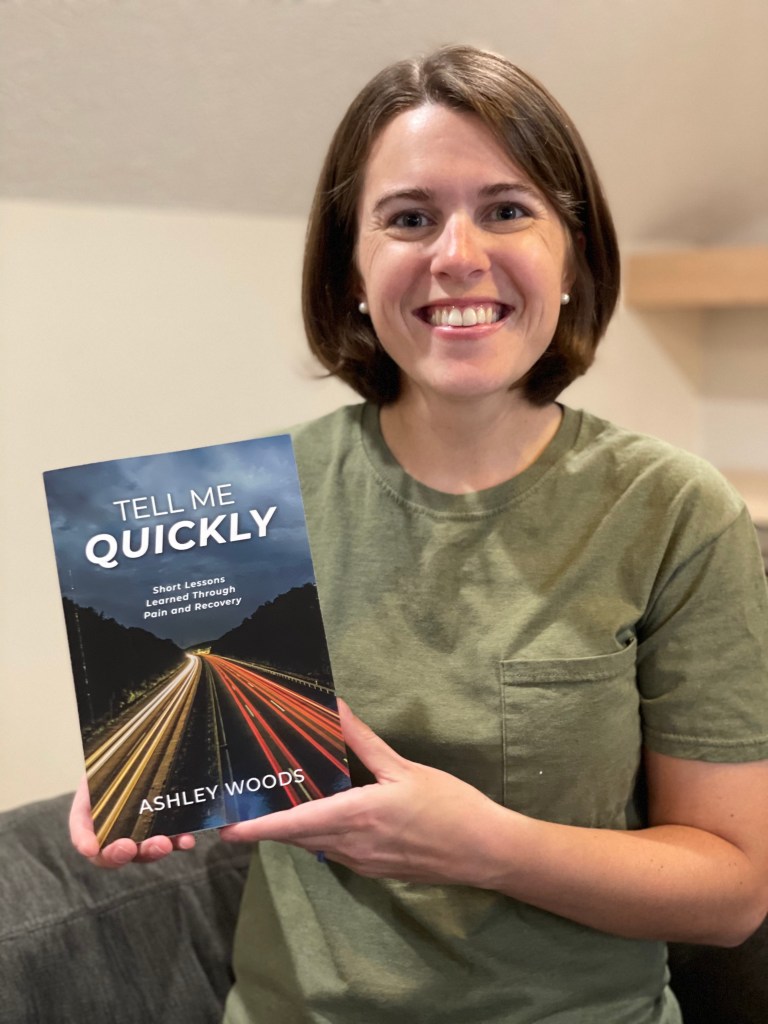
J: I loved this – I’m just going to pull out one of the poems of your book that I just really liked. ‘His Yoke Is Easy’ is the name of this one. It says, “We don’t have to carry people’s opinions, only God’s Truth.” I just thought that was a beautiful Truth, that we don’t have to carry other people’s opinions, only God’s Truth and what He thinks about us and again it’s nice and concise and says exactly what is true and I love that. That was a great one.
A: Thanks. I appreciate that.
C: So what’s a common myth about addiction or recovery or trauma healing that you hear from people?
A: I had a lot of myths even in my own head. In school when we learned about addiction they showed us the person that didn’t have any teeth because they were addicted to drugs and that was kind of my idea of what addiction is and while that’s one picture of addiction it’s not a comprehensive picture of addiction and so for me whenever I was struggling with addiction one of the first steps, admitting you have a problem, people say that a lot, that’s about the extent of what some people know but the first step says that we admitted we were powerless and that our lives had become unmanageable and for me during that time it was so easy to say yes my life is unmanageable I agree with but that word powerless I didn’t know if I was onboard for and one reason for that was I had a myth in my head that addicts couldn’t keep a job and so I thought well my life is unmanageable but I haven’t lost my job and so I don’t know that I’m necessarily powerless and it took me a lot of time and humbling from God and being around other people that were growing and healing to say I am, I am powerless so I do think it’s important to talk about dispel stereotypes in this because if anybody out there is like me it can keep you from getting healing or at least prolong the process of getting healing because you’re like, “Well, I don’t know that that’s me because that doesn’t fit what I think about addiction.”
J: You, actually, in your book, you talk about humility a lot. You mentioned that just then about humbling yourself and recognizing that you were powerless at some point and how hard that was to get there. What other themes did you see run through your recovery? Humility was one I picked up in the book over and over again. What are a couple of other ones?
A: Um, shame. I did not fully understand shame. To me, like even with sexual assault, shame is a huge part of being sexually abused or abused in any way but I didn’t relate to that. I even read a book on sexual assault and it was like shame is one of your issues and I thought, “No, it’s not for me.” Because I was really confusing guilt and shame. Guilt is about behavior and shame is about identity and so, to me, I was like I don’t have shame because I wasn’t the one who did that so I’m not experiencing that; however, I was and so what I was really saying was I don’t feel guilt but I do feel shame. Like why did this particular thing happen to me? Why am I different from other women that you know someone would seek me out in that way or whatever. And then in recovery realizing that shame is the driving force behind things like addiction because I feel uniquely different than everyone else in a negative way but the truth is I’m just like everybody else and we’re all equal and so I can get help just like everybody else.
C: I believe in Christian culture today counseling and mental health is not talked about near enough and I don’t believe it’s embraced positively by many in the Church. That we just say, “Oh, well, you’ll be okay.” Or we give the Christian platitudes of “Pray more” or “Let go and let God” or insert any number of things and it’s very hurtful and I think that we need to change that and so part of this conversation today is just to bring that awareness around that counseling is okay. It’s okay to seek out counseling. Do it with a Christian counselor, someone who has the same worldview and the same Biblical background that you’ve got but seek help. Don’t just sit and hide and think, “Oh, I’m okay” because we’re all broken in a way that may not be like somebody else’s but there’s something in all of us that needs addressed.
C: So what’s one thing that you’d like our listened to know about addiction healing or trauma healing through Christ, specifically through Christ?
A: That there is a solution. I just thought that I was crazy. To find out that there is help, that I can heal with God, that He does care and that He gave me practical ways even to heal. We just might have to research them and look for wisdom in those things. But that was huge for me. I remember going to a counselor and just being at my wits end about what was wrong with me and I remember being like I’m ready to start over like I think I might have a personality disorder like something is super wrong with me and while that would’ve been okay if it was it just wasn’t the fact. I was just thinking that I was crazy and I ended up finding that it was addiction issues and unhealed trauma.
C: What are some specific things that you have done to help reconcile your theology and your reality? We’ve talked about God being good but life really wasn’t good at that point when you were in the midst of this. What are some specific things that counselors have had you do to walk through?
A: Well, we were talking about the Church and maybe their not full understanding of mental health issues and one even being that my experience with some things in the Church is like if there’s like an addict and they come to Christ and they’re not addicted to drugs anymore that they’re like, “Yay! You are healed through Jesus!” and God can absolutely do those things but that person’s struggle is going to be a lot longer than that one moment and so I took on a lot of, even if they were not said to me just beliefs or pressures from the Church to be a certain way and I had to let go of a lot of that and come to God new without any sort of expectations in my head and that helped a lot.
J: I want to read one more of your poems. This is one that’s early in the book but it says a lot of things. ‘Healing Trauma’ is the name of this one. “You cannot heal trauma without talking. Suppressed memories = trauma untold. Trauma untold = unwanted behaviors. Unwanted behaviors = unwanted consequences. And, if you’re fortunate… Unwanted consequences = point of desperation. Point of desperation = talking. Talking = trauma told. Trauma told = trauma healed. You cannot heal trauma without talking.” I loved how concise that is and how just the truth of it. It gets right to the point – without talking, you cannot heal trauma. It’s really good.
A: Thanks. Yeah, that’s one of those practical things that like you have to talk, you have to speak and God wants to heal those things but they require something from me too like He can’t come the full 100% and reach in and heal my heart. I have to speak to Him and I have to speak to others just like in the Bible when it says to confess our sins to one another and pray for one another so we may be healed and even thought those aren’t necessarily sins talking to one another and fellowship and not neglecting to meet with one another. Overall, just really practical Biblical Truths that I just didn’t know applied to trauma and mental health issues but they do.
C: They do. It’s amazing how much we can learn from Scripture if we’re actually in Scripture and how it applies to everything in every area of life, no matter if life is going okay or we’re struggling with whatever hard time it is.
J: I wanted to share a little verse of Scripture here. Matthew 11:28-30 – “Come to Me, all who are weary and burdened and I will give you rest. Take My yoke upon you and learn from Me for I am gentle and humble in heart and you will find rest for your souls. For My yoke is easy and My burden is light.” And I love that He wants to hear what is on our hearts and on our minds to bring those burdens to Him and His yoke is easy and His burden is light and whatever burden we’re carrying we can take it to Him and we’re going to be able to handle whatever He gives us and He can bring us through whatever we’re dealing with. I just love those verses as well. Very encouraging.
A: As we’re talking, I’m just thinking more and more of some of the practical things that are in the Bible because there are practical things and that’s so important to me as someone who is a practical person but another process that I’ve had to go through is my resentments and people that I need to make amends to like all of those things are in the Bible and those were things that I had to do during my recovery process is to say who do I have these resentments against and what is my part in those things and what amends do I need to make whether it’s directly to them or it’s moving forward the living amends that I’m going to make and that’s all based in Scripture.
J: And whether or not they in turn ask for forgiveness or make amends on their ends it’s part of your healing to make amends on your end whether they do or not but is part of recovery as well.
A: Absolutely. And I had to do, like I said, in my reconciliation with God because I think many people have said that if you’re bitter and you hold a resentment against someone that that’s really just hurting yourself and I was even wanting to do that in my relationship with God where it’s like I’m mad at God and I’m bitter toward God but that doesn’t ultimately hurt Him, that’s really hurting me and so doing the work on my end so that I can experience that freedom that I’m actually wanting. And there’s another saying that resentment is like drinking poison and waiting for the other person to die.
C: Some of those are very visual to put concepts into a very applicable manner because we can see that word picture there.
C: So as we’re wrapping up – how has taking Christ’s easy yoke and living in that affected your immediate family and your extended family and your friends as you’ve walked this path and are not a little on the other side of it?
A: The easy yoke is me accepting my own humanness and me realizing that I’m 100% human and God is the one who is 100% God and speaking directly to my family that helps them connect with me more because I don’t have this mask of perfection on that I’ve had for so long and a lot of that just stems from childhood like having a dad that wasn’t there for me and abandoned me that led to some anxiety and a very low self-esteem in me and so I overcompensated WHOA way on the other side in order to fill that void of low self-esteem and one way that I did that was through perfectionism but God stripped a lot of that away so now I can see and say that I am not perfect that I am just human and that puts me in my right place and then I can have right relationships with God and my family and my friends and myself.
C: Which is what our goal should be. To walk and live humbly and in peace with those around us.
J: Yes. Thank you so much for spending this time with us. It’s been such a refreshing talk to talk to you and hear your transparency and for you to talk about your journey with the Lord through all of these difficulties. He has brought you forth as gold and continues to do so. It’s really a beautiful story. Thanks for sharing it.
A: Thanks for having me. I really appreciate this time with you guys.
 Five Is Fine